Positive social impacts
Millions of people worldwide rely on agriculture for their livelihoods. Multi-generational families have built their lives and careers with SIPEF, with children born on plantations attending SIPEF schools and some earning scholarships to international universities.
Our Balanced Growth Strategy rests on the premise that growth is not possible without first being a responsible employer and neighbour. SIPEF is committed to respecting human, labour, and community rights, in accordance with local laws and international frameworks. By providing employment, health, education, and infrastructural services, we create shared value and foster long-term relationships within the communities in which we operate.
We extend this same respect to the communities that neighbour our operations and those of our suppliers. This includes upholding indigenous and local communities' legal and customary land tenure rights, as well as their rights to resources, territories, livelihoods, and food security.
Free, Prior and Informed Consent (FPIC)
A thorough Free, Prior and Informed Consent (FPIC) process is critical to the long-term success of any new operation. All SIPEF plantations, and those of our suppliers, must adhere to FPIC principles as defined by the Roundtable on Sustainable Palm Oil (RSPO) and Rainforest Alliance (RA). This includes, for example, a community's right to say 'no', its right to legal representation of choice, and its right to compensation, where existing operations have had a proven impact.
The concept of FPIC does not end with the transfer of land rights. All social aspects and impacts are identified and addressed at all stages of plantation development through an ongoing stakeholder engagement process in line with the SA8000 social accountability methodology. These engagements are audited annually for representativeness, transparency, and other criteria as per sustainability standards.
Where land conflict exists, we implement agreed conflict resolution processes. SIPEF’s conflict resolution mechanism is embedded in its Grievance Procedures. Details of land conflicts are available on the SIPEF Grievance Dashboard.
Fair labour practices and workplace safety
SIPEF is committed to treating all employees fairly, protecting their rights, and upholding labour standards across its operations. We comply with all applicable local laws and aligns with international frameworks, including the International Labour Organisation’s (ILO) Declaration on Fundamental Principles and Rights at Work and the United Nations’ Universal Declaration of Human Rights. Our commitment is reflected in SIPEF's Responsible Plantations Policy (RPP) and Human Rights Policy, as well as in dedicated policies on child labour, forced or trafficked labour, freedom of association, occupational health and safety, equal employment opportunity, and protection of reproductive rights.
Beyond compliance, our commitment extends to enhancing the wellbeing of employees across our operations in Indonesia, Papua New Guinea, and Côte d'Ivoire.
Permanent and casual workers are employed according to labour regulations and receive a decent living wage, including those on piece rate/quotas, for which the calculation is based on achievable quotas during regular working hours. SIPEF is committed to providing a fair and decent living wage as required by the RSPO.
Safety at work is ensured through continuous training, by the provision of appropriate protective equipment, and by internal supervision and control systems. Every working day starts with a safety briefing.
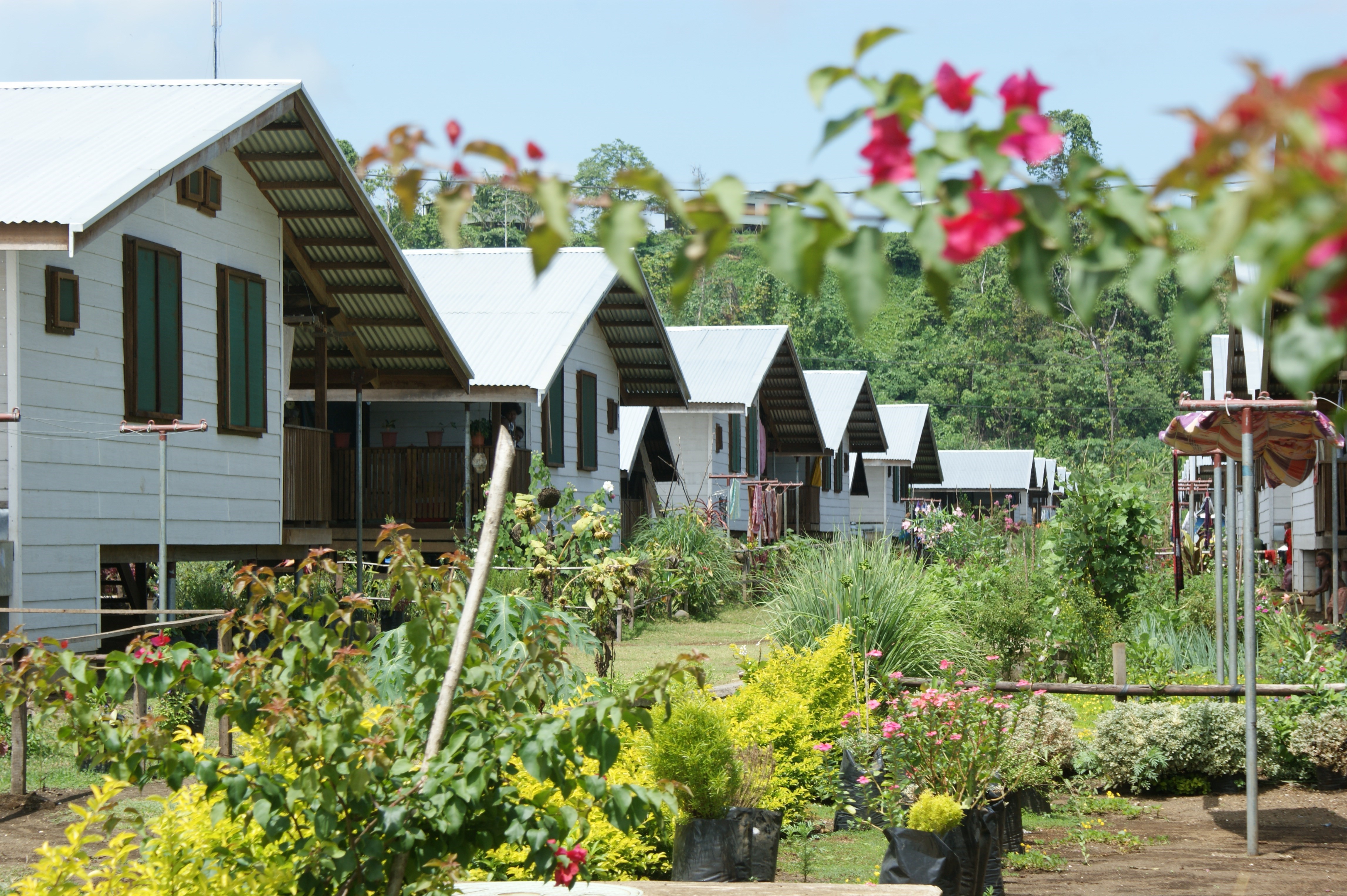
Most of SIPEF’s employees and their families live within its operations and are provided with housing, clean water, medical services, as well as access to education for all their children.
Supporting long-term relationships
SIPEF’s operations are embedded in broader natural and social landscapes, where long-term relationships are built with local communities. We seek to ensure that local communities benefit from our presence by providing employment and investing in essential infrastructure such as schools, roads, health centres, bridges, and places of worship.
Our teams engage regularly with communities and key stakeholders through surveys and participatory meetings. These engagements capture perceptions of SIPEF's activities, including positive and negative impacts, which are integrated into a risk management process with mitigation measures that are implemented, monitored, and continuously improved.
SIPEF also supports food security for communities and employees. In Indonesia, for example, workers and their families receive on average 28–32 kilograms of rice per household each month.
Many surrounding communities depend on farming and we support their livelihoods where requested. In Indonesia, this includes providing planting material, land management services, and guaranteed market access through village planting programmes (Kebun Masyarakat Desa).
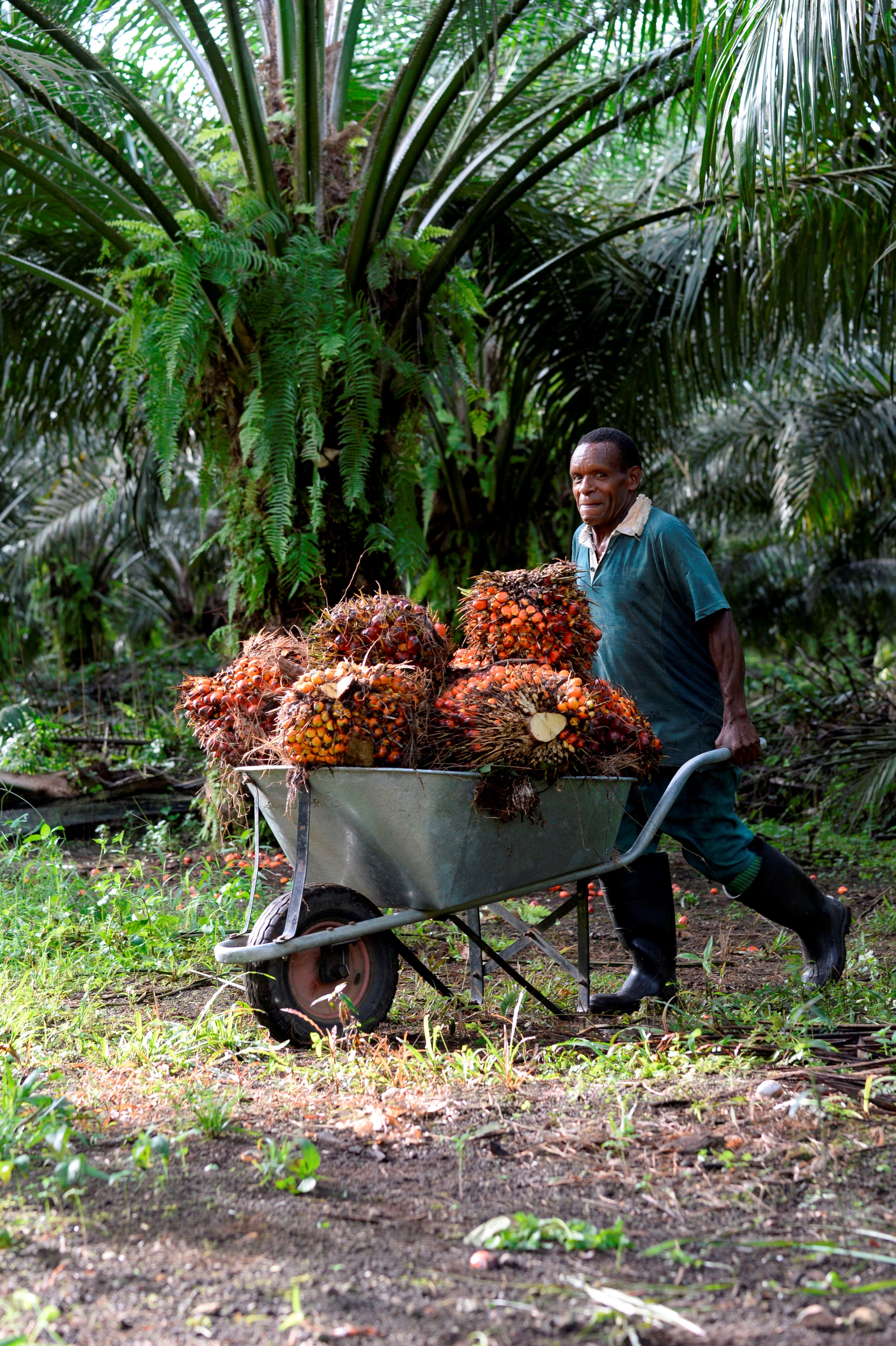
In Papua New Guinea, more than 3,640 smallholders supply fruit to SIPEF mills, contributing to about half of Hargy Oil Palms’ production, which prioritises smallholder crops.
Community engagement
SIPEF works closely with smallholders and local communities to promote inclusive development and reduce environmental pressures. We support income diversification, strengthen resilience, and encourage sustainable land use.
In Indonesia, community initiatives are integrated into conservation programmes, such as SIPEF Biodiversity Indonesia (SBI). Through agroforestry and food garden projects, farmers generate household income while contributing to forest protection.
In Papua New Guinea, our community engagement focuses on minority stakeholder groups that do not directly benefit from oil palm production, including women, youth, and older persons. We support these groups to engage in service activities and receive training in life skills, financial literacy, and employability. SIPEF also promotes the formal registration of youth associations, enabling access to contracts and financial services. Some community groups are now actively involved in environmental initiatives, such as mangrove restoration and the protection of buffer zones near ecologically significant sites, including Barema Waterfall and Pale Beach, a known turtle nesting area. These efforts aim to strengthen coastal resilience and foster environmental stewardship.
We monitor our community engagement programmes and incorporate community feedback to ensure these initiatives respond to local needs and contribute to wider conservation and sustainability objectives.