Best Management Practices
To reduce environmental impact, SIPEF implements Best Management Practices (BMPs), alongside regenerative and circular approaches that reuse production and processing by-products wherever possible.
Our agricultural BMPs are grounded in certified standards, a culture of innovation and continuous improvement, and more than a century of experience. They are consistently applied across our own operations and those of our third-party smallholder suppliers.
Soil Management
We monitor and maximise soil health, because we know that when we care for the soil, we care for all the life it sustains.
SIPEF is committed to reducing reliance on inorganic fertilisers while maintaining or improving yields. One way we achieve this is by returning organic matter to the soil, for example through the application of empty fruit bunches (EFB) and compost to mineral soils. At Bukit Maradja palm oil mill, EFB and palm oil mill effluent are composted at scale, enabling the substitution of equivalent amounts of inorganic fertilisers where the compost is applied. We prevent soil erosion through the use of cover crops, especially during replanting seasons. Burning is prohibited in the field.
Managing organic soil
Since December 2015, SIPEF has been committed to no new plantings on peat of any depth. In areas with previously developed organic soils, we apply best management practices in line with RSPO peatland management guidance and local regulations. We implement these practices to preserve soil integrity, ensure environmental compliance, and prevent further degradation.
A core element of SIPEF’s approach is the implementation of RSPO-compliant drainability assessments in applicable cultivated organic soil areas. These assessments evaluate the potential for future subsidence and flood risk in peatlands, enabling us to proactively adjust our management practices. The aim is to minimise subsidence rates and extend the productive lifespan of plantation areas on organic soils.
In 2024, SIPEF’s oil palm operations in Indonesia included approximately 17,000 hectares of cultivated organic soils, managed in accordance with sustainability standards and regulatory requirements. This area has remained unchanged since 2023.
Beyond drainability, SIPEF also actively manages hydrology and soil conditions through continuous monitoring and adaptive practices. We routinely conduct hydrology assessments to support water level control, and implement soil management protocols to maintain productivity and ecological balance.
Water management
SIPEF’s water management approach focuses on maintaining water availability and quality for both operational needs and the surrounding communities and ecosystems. We track water use across our operations, and commit to ongoing efforts to improve efficiency in both our field and processing operations.
As part of our commitment to sustainable water management, we are implementing rainwater harvesting systems at all our palm oil mills. This initiative aims to reduce water withdrawals. In line with this, we have set a target to achieve a reduction of 168,000 m3 in water withdrawal from our palm oil mill operations by 2030, using 2025 as the baseline.
We carefully manage wastewater discharge and irrigation practices to minimise environmental impact. All of our facilities are equipped with appropriate treatment systems, and we maintain discharge parameters within the limits of legal and certification standards.
Carbon management
SIPEF's greenhouse gas (GHG) emissions
As an agricultural company, SIPEF is committed to reducing our GHG emissions and building long-term climate resilience. To achieve this goal, we have launched a comprehensive climate transition plan that integrates sustainable energy practices, circular economy principles, optimised land use and water resource management, while protecting biodiversity. This approach contributes to fostering a sustainable, low-carbon future for the oil palm industry.
GHG emissions from our operations arise mainly from land use change, including cultivation on organic soils, palm oil mill effluent (POME), and operational inputs, such as fuel and fertilisers. Approximately 98% of our GHG emissions come from the cultivation and processing of oil palm products. Banana production makes a relatively small contribution, accounting for just 2% of SIPEF’s overall gross GHG emissions.
SIPEF's climate transition pathway to 2030
As part of our commitment to continuous improvement, we have aligned our GHG accounting and target setting methodology to the highest industry standards. This has been done in keeping with our commitment to a science-based target of limiting global warming to 1.5°C and maintaining compliance to regulatory requirements under the Corporate Sustainability Reporting Directive (CSRD).
SIPEF’s GHG inventory and accounting methodology is now fully compliant to the GHG Protocol and the target setting methodology is in line with the Science Based Target Initiative (SBTi). The 2030 GHG reduction targets are now divided into a 42% reduction in Energy and Industry Emissions (E&I) and a 30.3% reduction in Forest, Land and Agriculture (FLAG) emissions.
Achieving our emission reduction targets will require continued investments in circular technologies, regenerative agriculture and nature-based solutions. While SIPEF will not submit a commitment to SBTi, the current pathway puts us on par with industry leaders.
Climate change mitigation and energy
To address the impacts of climate change, SIPEF is actively adopting innovative and sound management practices in cultivation and processing to avoid or reduce GHG emissions. These practices include:
- Land use: SIPEF has completed HCV-HCSA (High Conservation Value - High Carbon Stock Approach) assessments to identify areas that can be developed within our own operations, while continuing to protect and conserve high carbon stock areas including organic soils identified within our operations. We have also implemented fire prevention and management measures in our oil palm operations. In instances where land that communities might otherwise develop is designated for conservation, we may mitigate the impact by purchasing or leasing the property from local landowners, ensuring they receive financial benefits.
- Methane reduction: Methane capture equipment will be installed in all SIPEF palm oil mills by 2030. We are also working to harness biogas from methane capture facilities for the production of bio-compressed natural gas (bio-CNG). Our first bio-CNG plant at Perlabian palm oil mill in North Sumatra, Indonesia, was opened in December 2025.
- Renewable energy: SIPEF generates renewable energy from milling by-products, such as fibres and shells, to power operations and employee compounds using steam turbines. One of our mills also captures methane from palm oil mill effluent (POME) and uses a biogas generator to produce electricity.
Integrated pest management and agrochemical use
We apply integrated pest management (IPM) across our oil palm and banana operations to protect crops, optimise yields, and reduce reliance on chemicals. IPM prioritises natural pest control, using predators and antagonistic plants, with chemicals applied only when necessary and reviewed annually.
Our pest management plans are tailored to each crop and region, and are informed by regular monitoring. Our aim is to keep pest populations below the acceptable thresholds, rather than eradicate them completely.
Our practices align with RSPO and Rainforest Alliance standards, which promote IPM, limit harmful chemicals, and prohibit highly hazardous pesticides, including paraquat, WHO Class 1A and 1B chemicals, and substances listed under the Stockholm or Rotterdam Conventions.
We continue to apply agrochemicals responsibly by supporting both productivity and environmental safeguards across our oil palm and banana plantations. Measured applications help optimise soil health and reduce chemical dependency, particularly by increasing reliance on organic fertilisers and applying pesticides prudently based on site-specific needs.
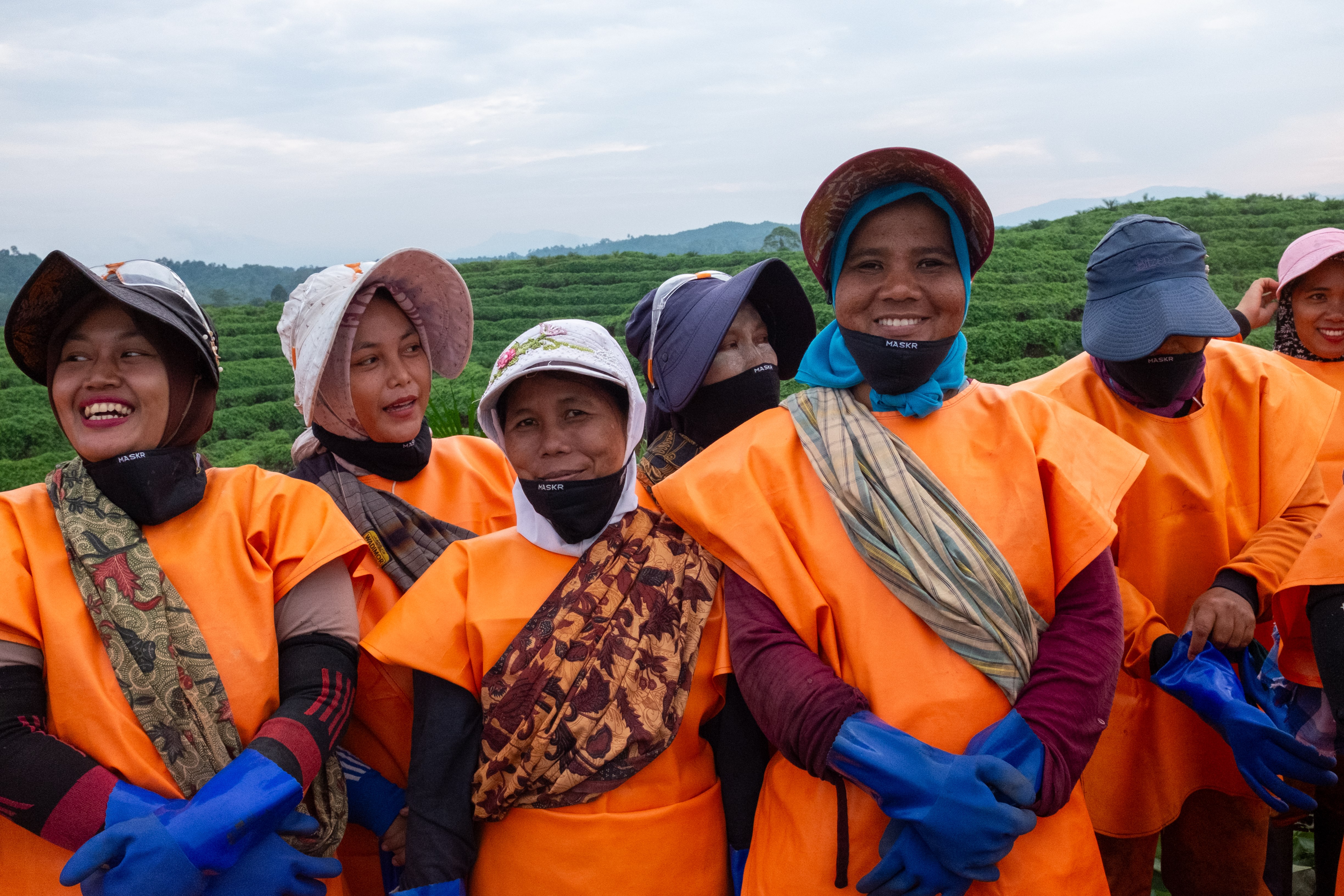
Employee safety is our priority. All of our chemical handlers receive training, wear full personal protective equipment (PPE), and undergo regular medical checks to maintain occupational health and detect early signs of exposure.