Working with smallholders
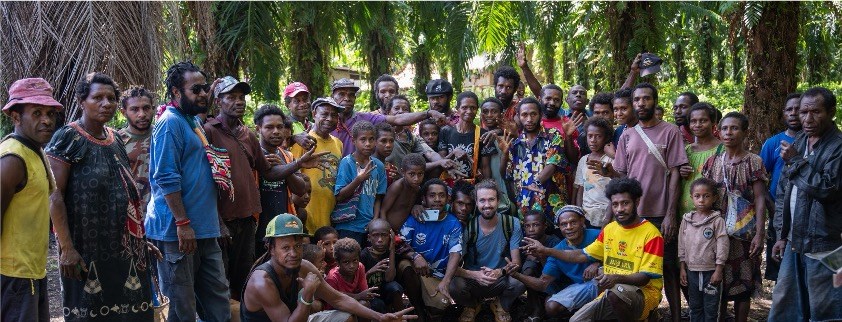
To achieve true balance in nature, we work in partnership with its guardians — the farmers and smallholders who grow, nurture, and harvest our crops — to improve livelihoods and share the benefits of sustainable agriculture.
Smallholder farmers cultivate approximately 40% of the world's oil palm plantations and produce around 25–30% of the world's palm oil. The sector provides a stable income for millions of rural families and has played a significant role in lifting many out of poverty. Collaborating with smallholders is therefore essential for both sustainable palm oil production and achieving broader objectives such as poverty alleviation, food security, and inclusive economic development.
Smallholders are viewed as valued business partners in SIPEF’s commitment to responsible and sustainable agriculture. Through tailored support in training, technical expertise, access to certification pathways, and livelihood enhancement, SIPEF ensures that sustainable practices are both accessible and practical for smallholders.
SIPEF is committed to responsible and inclusive growth, ensuring smallholder suppliers receive support, training, and resources to strengthen productivity, environmental stewardship, and livelihoods, while mitigating human rights risks.
Our collaborative approach empowers smallholders to adopt environmentally responsible practices that minimise the impact of agricultural expansion on natural ecosystems. At the same time, these partnerships deliver tangible benefits to smallholders, including increased yields, improved production quality, higher incomes, and access to international markets.
SIPEF's smallholder programmes
SIPEF has established a range of programmes to support the different types of oil palm smallholders we work with. All of our third-party suppliers are smallholders with whom we have agreements, whose production locations are known and mapped, and who are either already certified by the Roundtable on Sustainable Palm Oil (RSPO) or are working towards certification under the Group's RSPO Time-Bound Plan.
We also engage with independent smallholders in Indonesia who are not yet part of our supply base, aiming to support their inclusion in SIPEF’s certified sustainable supply chain, wherever possible.
SIPEF collaborates with over 5 000 oil palm scheme smallholder members within our supply chain in Indonesia and Papua New Guinea, collectively managing over 21 000 hectares of planted area.
- In Indonesia, we work with two main categories of oil palm smallholders. Scheme smallholders, which include cooperatives (koperasi) and village-based partnerships (Kebun Masyarakat Desa), where production areas are fully managed by SIPEF. We also work with independent smallholders, who manage their own land and have the option to sell to SIPEF, depending on their commitment and progress towards RSPO certification.
- In Papua New Guinea, smallholders retain full ownership of their land and production decisions. However, due to their geographic location, they are linked to SIPEF’s supply chain and sell their fresh fruit bunches (FFB) to SIPEF mills located near the smallholder operations.
Through our programmes, we share Best Management Practices, offer seedlings of the same provenance as SIPEF’s at cost price, supply fertiliser and equipment, assist smallholders in obtaining and maintaining RSPO certification, and offer agronomic and logistical support for crop transport.
More details on the different types of smallholders working with SIPEF and our country-specific work can be found on the SIPEF Indonesia and SIPEF Papua New Guinea local websites.
Supporting smallholders to certification
SIPEF supports smallholders in their journey towards improved, sustainable, and certified production. By taking advantage of our training and support, smallholders can achieve RSPO certification. This allows them to earn higher incomes and have better access to international markets.
As of 2024, 89% of the total scheme smallholder planted area within SIPEF’s supply chain is RSPO certified. SIPEF has set measurable targets in line with its Time-Bound Plan and commitment under its Responsible Plantations Policy and Responsible Purchasing Policy to achieve 100% RSPO certification across our entire supply base.
To support compliance, we actively engage new smallholders and support their integration into our certified supply base. Currently, crops from smallholders undergoing certification are processed by third-party mills, enabling our own mills to maintain a fully RSPO-certified supply base where applicable.
To manage the risks associated with integrating new smallholders, SIPEF has issued a Responsible Purchasing Policy providing a framework for critical compliance requirements. These include land legal ownership, commitment to no deforestation, Free, Prior, and Informed Consent (FPIC), and traceability. The policy also outlines procedures to monitor, support, evaluate the progress, and review participation of non-compliant smallholders.
For further details on smallholder management and engagement, please refer to the smallholders engagement framework.