Smallholders
SIPEF’s smallholder programme in Papua New Guinea began in the 1980s when the Group and the government were the founding partners of Hargy Oil Palms.
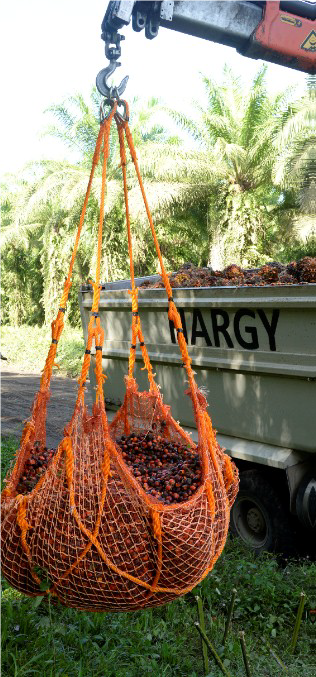
During this period, Hargy Oil Palms collaborated with the Australian Government and the World Bank in a public–private partnership aimed at promoting sustainable rural development. The programme connected commercially viable, export-oriented oil palm plantations with smallholder participation, with the goal of fostering economic empowerment and inclusion of smallholders in the broader economy.
The government supported the development of smallholder areas in remote locations in Papua New Guinea through its Land Settlement Scheme (LSS) and Village Oil Palm (VOP) programmes.
- Under the LSS programme, families began as smallholders on blocks of land that were roughly four to six hectares in size, with two hectares set aside for housing and food crops.
- Under the VOP programme, customary landowners are involved, with government and company support provided to develop selected areas of their land for oil palm cultivation.
In 1984, SIPEF acquired the shares of one of the original private investors, becoming a key shareholder in Hargy Oil Palms. In 2004, SIPEF acquired the remaining shares held by the Government of Papua New Guinea, becoming the sole owner of Hargy oil Palms.
As of 2025, Hargy Oil Palms partners with 3 640 smallholders within its supply chain in Papua New Guinea, who collectively manage over 14,800 hectares of planted area. These smallholders contribute approximately 40% of the fresh fruit bunches (FFB) processed across all Hargy Oil Palms palm oil mills.
Smallholders programmes in Papua New Guinea
In Papua New Guinea, Hargy Oil Palms works with associated smallholders who own and manage their land and production. Due to their geographic location, they are linked to SIPEF’s supply chain and sell their crops to Hargy Oil Palms mills situated near their operations. For certification purposes, they are classified as scheme smallholders. All Hargy Oil Palms associated smallholders in Papua New Guinea are RSPO certified.
Hargy Oil Palms works closely with its smallholders to improve yields by providing training and extension services. Additionally, investments are being made in research and development in collaboration with a local planning committee, to further support sustainable and productive smallholder practices.
The company works with smallholders both directly and through the local planning committee, which comprises representatives from the Oil Palm Industry Corporation (OPIC), the Bialla Oil Palm Growers Association (BOPGA), the Oil Palm Research Association (OPRA), the East Nakanai Local Level Government (ENLLG), and Hargy Oil Palms itself.
It operates a smallholder transport division under the smallholder department, collecting crops from each smallholder individually. Hargy Oil Palms sells tools and fertiliser at cost, providing interest-free credit where required and upon request. It also supports replanting initiatives and ensures that only high-quality seedlings are supplied.
The company makes payments directly to each individual smallholder via bank transfer every fortnight. Where applicable or requested, Hargy Oil Palms can divide the payments among different household members. Many families choose to split the payments across individual accounts to ensure that women in the household receive their share directly.
Risk management and RSPO certification
All smallholders supplying Hargy Oil Palms have maintained RSPO certification since 2009 and share in all premiums that SIPEF receives from the sale of certified products.
Hargy Oil Palms provides smallholders with regular training, and conducts block inspections and internal audits to support their re-certification process. The company also hosts additional training sessions to ensure smallholders remain up to date with the latest Best Management Practices.
More information on the implementation of the Responsible Purchasing Policy and how it supports SIPEF's growing smallholder programmes, can be found in the smallholders engagement framework.
Increasing yields and production efficiency
Beyond maintaining RSPO certification, a key objective for smallholders working with Hargy Oil Palms is to improve the productivity of their planted areas.
To support this goal, Hargy Oil Palms has strengthened its direct involvement in smallholders extension services since 2017, fostering highly positive collaboration with farmers. The company is investing in building knowledge of effective production practices, with the expectation that yields will continue to improve over time.
Both OPRA and OPIC provide extension, research, and development services to smallholders. Their core mandate is to enhance productivity through improved farm management, provide technical guidance, and deliver education on sustainable oil palm cultivation methods.
Services include research on integrated pest management (IPM), pest and disease control, outreach and awareness, and initiatives focused on livelihoods and community development.