Environment and biodiversity
Hargy Oil Palms' environmental management approach is aligned with SIPEF’s sustainability strategy and its commitment to responsible agriculture. The company implements practices designed to minimise the environmental and climate impacts of its operations while supporting the long-term sustainability of its operations.
Hargy Oil Palms operates in accordance with recognised sustainability standards, including those of the Roundtable on Sustainable Palm Oil (RSPO), which provides a framework for responsible palm oil production, environmental protection, and biodiversity conservation.
Environmental practices at HOPL are guided by SIPEF’s group-level sustainability policies, including the Environmental and Biodiversity Policy, the Responsible Plantations Policy, and the Responsible Purchasing Policy. These policies outline the Group’s commitments on sustainable land use, environmental protection, and responsible supply chain management. Their implementation is further supported by High Conservation Value (HCV) and High Carbon Stock (HCS) assessments, which help identify, protect, and monitor areas of ecological and cultural importance.
Further information on these policies can be found in the Environmental and Biodiversity Policy, the Responsible Plantations Policy, and the Responsible Purchasing Policy.
New Britain Sustainable Landscapes Initiative (NBSLI)
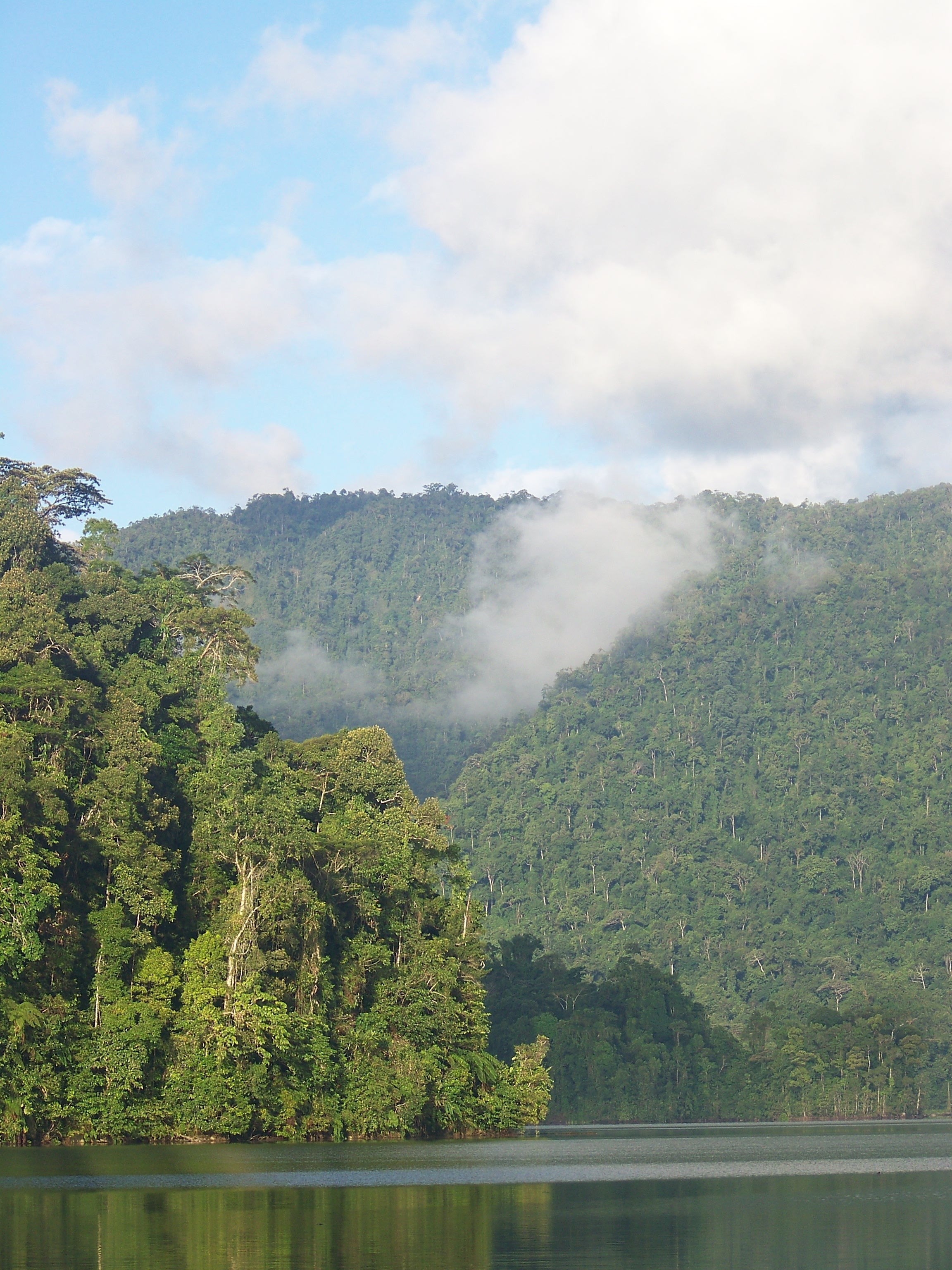
SIPEF is planning to pilot a new initiative in Papua New Guinea: the New Britain Sustainable Landscapes Initiative (NBSLI). The initiative aims to protect forest habitat around a lake within a volcanic caldera at the edge of SIPEF’s production landscape, integrating forest conservation, sustainable land use, and inclusive development at a landscape scale.
Situated within the New Guinea biodiversity hotspot, the area is one of the richest yet least-studied regions on Earth and holds deep cultural significance for surrounding communities.
Coastal ecosystem rehabilitation
Hargy Oil Palms supports the rehabilitation of coastal ecosystems to strengthen natural protection against erosion and flooding. Restoration activities include mangrove planting, assisted natural regeneration, and the establishment of coastal buffer zones.
These initiatives contribute to the SIPEF’s group target to protect coastal shorelines and prevent flooding through mangrove planting and coastal buffer restoration by 2027. To support this effort, 2 116 mangrove seedlings have been planted in Papua New Guinea.