Environment and biodiversity
In line with SIPEF’s sustainability strategy, Tolan Tiga Indonesia is committed to protecting natural ecosystems while ensuring responsible agricultural production.
These commitments are guided by SIPEF’s Environmental and Biodiversity Policy, Responsible Plantations Policy and Responsible Purchasing Policy, which set requirements for responsible land management, biodiversity conservation, and sustainable sourcing across the supply chain. They are implemented in alignment with the principles and criteria of the Roundtable on Sustainable Palm Oil (RSPO).
Implementation of these policies is further supported by High Conservation Value (HCV) and High Carbon Stock (HCS) assessments, which help identify, protect, and monitor areas of ecological and social importance within and around Tolan Tiga's operations.
Landscape-level programmes
SIPEF has a strong track record of designing and implementing ambitious biodiversity and landscape initiatives near Tolan Tiga operations in Indonesia. These programmes integrate conservation, forest restoration, and sustainable livelihoods to protect high-value ecosystems while supporting community well-being and enhancing climate resilience.
SIPEF Biodiversity Indonesia (SBI)
SIPEF Biodiversity Indonesia (SBI) is a biodiversity conservation and ecosystem restoration initiative established by the SIPEF group in Indonesia. The programme covers 12 656 hectares adjacent to Kerinci Seblat National Park in Bengkulu Province, forming an important buffer zone for the park and protecting forest ecosystems of high biodiversity value. The conservation area includes lowland, premontane, and montane rainforest, supporting a wide range of wildlife and contributing to the long-term protection of this globally significant landscape.
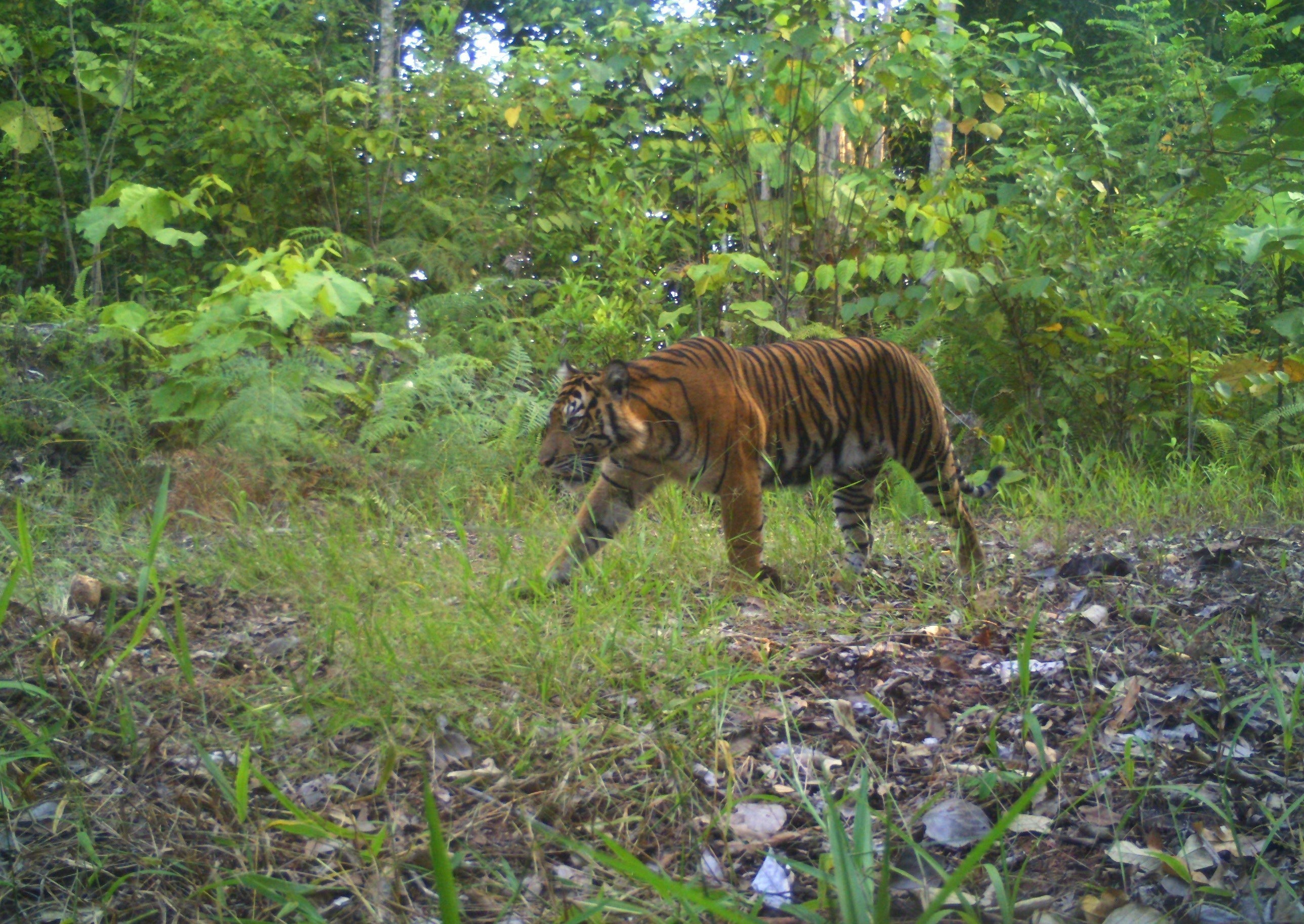
Through forest restoration and community-led stewardship, SBI works with surrounding communities to protect rare, threatened, and endangered species, including the critically endangered Sumatran tiger (Panthera tigris sumatrae) and the Sunda pangolin (Manis javanica).
As of 2024, SBI has restored 286 hectares of degraded land and supported 376 smallholder farmers through agroforestry programmes. Since 2016, more than 91 000 native trees have been planted.
SIPEF has set a target to restore 1 123 hectares of degraded land within SBI by 2033, reaffirming the Group’s long-term commitment to conservation and community-led landscape management.
Wildlife monitoring and forest protection
Forest protection and biodiversity monitoring are carried out by SBI rangers, supported through collaborations with the Zoological Society of London (ZSL) and the Indonesian non-governmental organisation (NGO) SINTAS.
In addition to the Sumatran tiger, camera traps have recorded rare wildlife in the area, including clouded leopards, dholes, mainland serow, and Malayan sun bears.
The Zoological Society of London has profiled the SBI project as an example of how companies can support conservation in tropical agriculture and forestry.
SIPEF Biodiversity Indonesia is one of sixteen Ecosystem Restoration Concessions (ERCs) in Indonesia, licensed under Ministerial Decree No. 622/Menhut-II/2013.
Turtle conservation

Along a 6.5-kilometre stretch of beach in Sumatra, SIPEF safeguards nesting sea turtles through a community-led conservation initiative implemented by its Indonesian conservation foundation, Yayasan SIPEF Indonesia (YSI). The programme protects turtle nests by collecting eggs from vulnerable beaches, incubating them in controlled facilities, and releasing hatchlings safely into the ocean.
The programme is implemented under the supervision of local authorities in Bengkulu and helps reduce threats such as predation, poaching, and nests lost to beach erosion. The project also promotes environmental awareness by engaging local communities and schools in the protection of coastal ecosystems.
Biodiversity monitoring
Tolan Tiga Indonesia has initiated new biodiversity baseline assessments in collaboration with external experts, focusing on indicator species such as bats and birds. These surveys improve understanding of species presence and help inform biodiversity monitoring and management.
The assessments are complemented by community-driven biodiversity monitoring initiatives, including a citizen science approach that supports species identification, data collection, and engagement with employees and local communities. These initiatives reinforce awareness of the importance of conserving HCV and HCS areas.