How SIPEF is creating a sustainable future for smallholders
Smallholders cultivate approximately 40% of the world's oil palm plantations and produce around 25–30% of the world's palm oil. The sector provides a stable income for millions of rural families and has played a significant role in lifting many out of poverty. Collaborating with smallholders is therefore essential not only to sustainable palm oil production, but also to broader objectives, such as poverty alleviation, food security, and inclusive economic development.
At SIPEF, we see smallholders as neighbours and valued business partners in our shared commitment to responsible and sustainable agriculture. Through tailored support in training, technical expertise, access to certification pathways, and livelihood enhancement, we work to make sustainable practices accessible for these important industry participants.
Paving the way for future smallholder development at Hargy Oil Palms
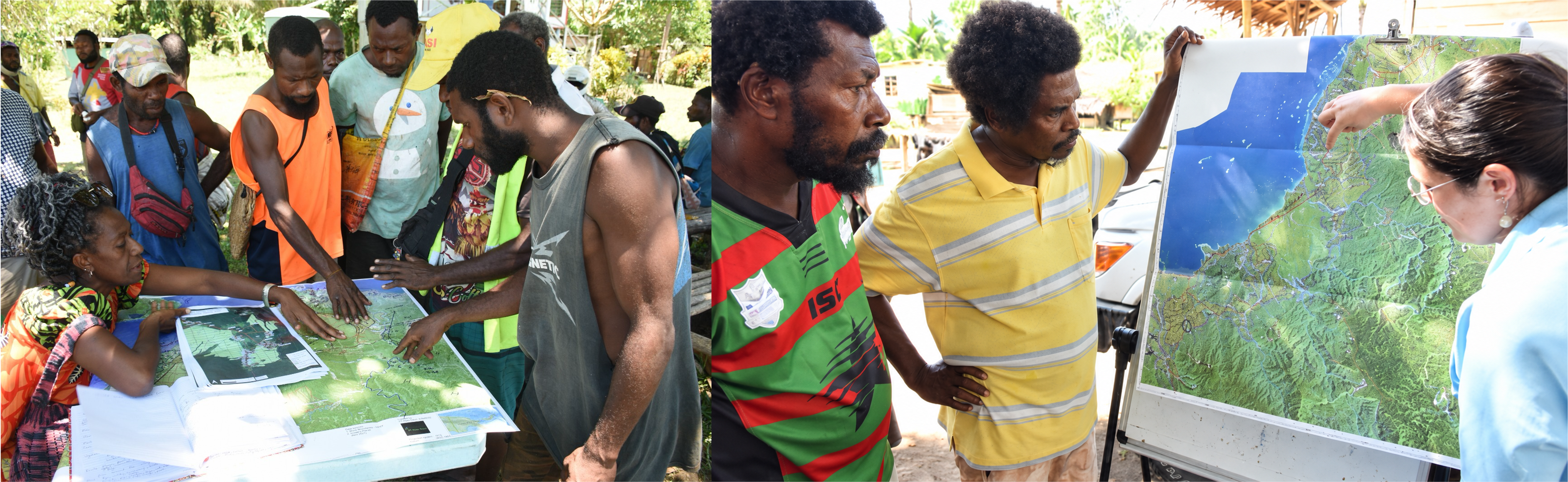
For our subsidiary in Papua New Guinea, Hargy Oil Palms, one of the most significant milestones of 2026 has been the completion of the Roundtable on Sustainable Palm Oil (RSPO) New Planting Procedure (NPP) for approximately 8000 hectares of unforested land eligible for planting. The current expansion effort embodies a holistic approach, focusing not only on areas for oil palm expansion but also considering areas for food production, alternative livelihoods, and conservation. For participating smallholder communities, this achievement represents an opportunity to increase productivity, improve household incomes, strengthen long-term livelihood opportunities, and maintain ecosystem services through conservation.
Hargy Oil Palms’ General Manager, Craig Gibsone, says the NPP is designed to ensure that new oil palm development is carefully assessed before planting begins. It takes into account environmental values, social considerations, land rights, and the views of affected communities. “The NPP process brought together technical experts, environmental specialists, social practitioners, community representatives, landowners, government stakeholders and the Hargy Oil Palms team to identify where future development could occur. Through extensive High Conservation Value (HCV) and High Carbon Stock (HCS) assessments, participatory mapping, land tenure verification, stakeholder consultation and community engagement, we sought to ensure that development opportunities will not come at the expense of important environmental and social values.”
During these detailed participatory land-use planning exercises, communities delineated areas for future oil palm, food gardens, livelihoods, and conservation. Planting will now follow over several years, with Hargy Oil Palms continuing to provide technical support, extension services, spatial verification, sustainability compliance, training, conservation incentives, and ongoing engagement with growers to ensure development remains aligned with RSPO requirements and evolving market expectations. Included in the conservation incentives is an offer from SIPEF to lease areas of high biodiversity from communities that agree to conserve them.
Supporting farming as a livelihood
Across our operations, we have established different programmes tailored to the needs and circumstances of smallholders.
Our Indonesian subsidiary, Tolan Tiga Indonesia, supports smallholders through structured cooperative and village-based programmes, providing direct management, financial assistance, and access to quality inputs. These programmes help enhance productivity and income security through agronomic support, logistical assistance, and structured pricing mechanisms.
To ensure fair and transparent pricing, SIPEF applies local fresh fruit bunch (FFB) pricing formulas that align with market conditions. Additionally, smallholders receive advanced monthly payments during the immature phase of plantation development, allowing them to maintain financial stability before their crops become productive. These payments, along with development costs, are gradually recovered through a structured purchase agreement, ensuring a sustainable, long-term supply partnership.
Hargy Oil Palms supports its smallholders with agronomic training, logistical assistance, and financial literacy training to help families manage income effectively and improve long-term financial security.
To further support livelihoods, it makes income payments directly to individual smallholders by bank transfer every fortnight, with the option, where applicable or requested, to divide payments among household members. Many families choose to split payments across individual accounts so that women in the household receive their share directly. The company also grants smallholders an annual bonus, calculated based on the total sustainability premiums received and allocated proportionally to the FFB supplied by each smallholder. The annual sustainability bonus paid to smallholders in 2025 was PGK 3 614 023.
Improving living and working conditions for banana growers
Supporting sustainable livelihoods extends beyond our smallholder programmes. In our banana operations in Côte d’Ivoire, we are also working to improve the living and working conditions of the people who contribute to our agricultural value chain.
Through our subsidiary, Plantations J. Eglin, we participate in a multi-stakeholder living wage initiative with trade unions, banana-producing companies, and government authorities. This collaboration has contributed to the country’s first national collective bargaining framework, setting out a roadmap towards a sector-wide collective bargaining agreement to improve wages and working conditions for banana workers.
Since achieving its first Fairtrade certification in 2019, Plantations J. Eglin has worked with employee unions to direct the Fairtrade Premium — an additional payment on top of the price for Fairtrade-certified products — into employee-led community projects, including schools and teacher housing.
Together, our initiatives in Indonesia, Papua New Guinea, and Côte d’Ivoire demonstrate our belief that to create long-term, sustainable value we must look beyond production to the people and communities who make agriculture possible.